This failure of basic short-term policy is surprising, given the star power that this government brings to its economic management.
The RBI in its monetary policy review in October has revised the inflation forecast to 6.5 per cent by March-end from 5 per cent earlier.

Brazil, Russia, India & China (known collectively as BRIC) on Sunday sought a re-balancing of representation on the executive board and the International Monetary and Financial Committee of the International Monetary Fund (IMF). The committee is the policy-making arm of the IMF.

Analysts and the media have near-unanimously approved the latest monetary policy update of the Reserve Bank of India which has left key interest rates unchanged, while indicating that its accommodative stance will continue until recovery becomes more robust. But it is possible to question whether this halfway house is the right place to be in right now.
Ahead of the G-20 Summit, Planning Commission Deputy Chairman Montek Singh Ahluwalia will lead a delegation to a preparatory meet on March 11 in London where deliberations on issues like liquidity crunch and reforms in international financial institutions are likely be taken up.

Subbarao pointed out that the non-banking financial companies could also play a significant role in deepening the process of financial inclusion. NBFCs can reach out where banks cannot, he added.
The meeting comes days after the finance minister told Parliament that he would discuss the possibility of further fiscal and monetary measures to revive economic growth, which is projected to fall to 7.1 per cent this year, as against 9 per cent or more in the last three years. The Central Statistical Organisation is due to release the third-quarter gross domestic product estimates by the end of the week. RBI is expected to announce more measures after the data is released.

Bankers are likely to urge the Reserve Bank not to hike its key-rates and mandatory cash requirement in its April-policy, as they fear that this would affect their liquidity, resulting in a sharp surge in lending rates.
Gearing up to face a difficult financial year, the Reserve Bank of India on Friday said it will explore all options to maintain comfortable liquidity position, while managing government's borrowing programme in a "least disruptive manner".

Economists say RBI to raise policy rates in annual policy statement in April.
The Reserve Bank of India on Friday said it will come out with its annual monetary policy for the next fiscal on April 20, amid expectations that the central bank will hike interest rates to tame the rising inflation

The central bank raised statutory liquidity ratio, the portion of deposits that banks are required to keep in government securities, by 100 basis points to 25 per cent. Other key rates were unchanged.

Finance minister Pranab Mukherjee said on Tuesday the Reserve Bank of India's move to keep almost all rates unchanged is line with the discussions he had with the apex bank's governor and the government's thinking on fiscal and monetary policies.
While there are certainly more hawks perched on monetary policy committees of central banks around the world now than a couple of months ago, the doves still have the upper hand.
The government is likely to appoint a deputy governor of the RBI by this month end despite disruption in the selection process following the resignation of former Satyam Computer independent director M Rammohan Rao from the selection committee. The government has appointed a Search Committee headed by RBI Governor D Subbarao to shortlist candidates for the post of deputy governor following superannuation of V Leeladhar last month.

Faced with the challenging task of balancing growth and inflation, the Reserve Bank of India will take measures in its quarterly review later this month to perk up the economy and to control inflation, which rose to 0.83 per cent for the third week of September.
The Reserve Bank of India on Wednesday said banks' response to monetary actions in terms of cutting interest rates have been mute and there is room for further softening of interest rates.
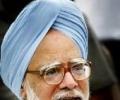
Prime Minister Manmohan Singh today reviewed measures taken by the government to ease the liquidity crunch faced by India Inc arising out of the global financial crisis as well as discussed possible measures to help Indian exporters tide over the downturn in key markets like the US and Europe.
In the wake of wholesale price-based inflation escalating to 7.31 per cent for the month-ended December and food prices increasing by over 17 per cent, it is expected that RBI will signal tightening of money supply.
After attending a meeting in Mumbai with RBI's top brass headed by Governor D Subbarao, Harsha Pati Singhania, president, FICCI, said the real rate of interest remained in double digits despite inflation having declined sharply. "Given the present interest rate structure and the inflation rate, real rate of interest is still in double-digits. With the near-zero rate of inflation, the real and nominal rates of interest are almost at the same level," said another industrialist.
The stress of dealing with the crisis, often with potentially conflicting objectives in front of them, appears to have brought the differences between the finance ministry and the RBI back to the surface.
The Reserve Bank of India's governor said On Thursday that there is a cost to any further fiscal stimulus package as it would put pressure on credit markets. However, RBI Governor Duvvuri Subbarao did not elaborate further on what this additional cost would be.
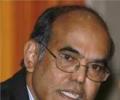
RBI had made available a potential liquidity of Rs 5.60 lakh crore (Rs 5.6 trillion), nearly 9 per cent of gross domestic product, to help the country tide over the liquidity crisis following the global financial meltdown triggered by the collapse of America's iconic investment banker Lehman Brothers in mid-September.
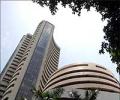
The NSE Nifty closes at 5,134, up 22 points. Global markets are trading mixed; European markets are marginally in the green while the US index futures are flat.

Data released on Thursday showed prices of essential commodities like cereals went up by 12.7 per cent, rice by 11.75 per cent, wheat 12.6 per cent and pulses rose by 42 per cent.
Financial Services Secretary Arun Ramanathan has been appointed as the Finance Secretary. "The Appointments Committee of the Cabinet has approved the appointment of Arun Ramanathan as Finance Secretary," an official statement said on Tuesday.
In an attempt to mitigate the problems faced by the beleaguered diamond industry in Gujarat, the Reserve Bank of India has decided to set up a task force comprising representatives of the state government, the State Level Banking Committee Convener and other bankers.The task force will submit its report by the month-end. Gujarat's diamond industry has been beset with problems, chief among them being lacklustre Christmas-season demand for finished diamonds.
Reserve Bank of India Governor D Subbarao on Tuesday said that unwinding of excess liquidity would need to be carefully calibrated once the economy recovered.Comparing the RBI's steps with other central banks, Subbarao said the speed and scale of monetary response was more aggressive than many other countries.The RBI has lowered the repo rate, the rate at which it lends to banks, from a peak of 9 per cent to 5.5 per cent in less than five months.

RBI governor D Subbarao, in the second quarterly review of the monetary policy in October, had said there is need to increase provisioning against bad assets to not less than 70 per cent by September 2010.
With inflation turning negative, industry has been demanding interest rate cuts to propel demand. However, RBI Governor D Subbarao had said there is no threat of deflation as food and crude oil prices are still firm.

RBI Governor D Subbarao explains the rationale for the moves announced in the second quarter review of the monetary policy in an interview with Sidhartha. Excerpts:
Reserve Bank Governor D Subbarao on Friday met Prime Minister Manmohan Singh and is believed to have discussed the state of the economy and initiatives taken by the central bank to arrest the impact of the global financial meltdown on the Indian economy.
Inflation close to 12 per cent is certainly beyond tolerance levels. Bringing it down is a priority. But there are challenges to doing so, because much of the inflation that we see today is 'imported', says Finance Secretary Duvvuri Subbarao.
Except for the change in the inset letter, the design of these notes to be issued now is similar in all respects to the banknotes in Mahatma Gandhi Series -- 2005, with additional or new security features issued on October 21,2005.
The meeting comes ahead of a fresh stimulus package aimed at sectors not covered in the earlier measures announced by the central bank and the government.

In addition, bankers also told Business Standard that they did not expect the central bank to hike policy rates or the cash reserve ratio in the third quarter review scheduled for October 27 as inflation was not rising fast though inflationary expectations were there.
A high-level committee on External Commercial Borrowings chaired by Finance Secretary D Subbarao is expected to take a final view on the matter this week. The committee comprises officials of the ministry of finance and the Reserve Bank of India. A high-level committee on External Commercial Borrowings chaired by Finance Secretary D Subbarao is expected to take a final view on the matter this week.
The Reserve Bank is in touch with various banks to understand why lending rates are not coming down despite the central bank cutting policy rates, even as the bankers expressed inability to lower the rates when bond yields remain high.
The finance minister said Prime Minister Manmohan Singh on Tuesday reviewed the financial situation with particular reference to the liquidity position at a meeting with the RBI Governor, Deputy Chairman of the Planning Commission Montek Singh Ahluwalia and senior officials of the ministry.
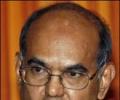
Reserve Bank Governor D Subbaro on Tuesday said there is scope for banks to lower lending rates further, but most top bankers maintained that interest rates will remain the same in the near term and could even rise after 3-4 months.
